Back
Understanding Builders Risk vs Contractor All Risk Insurance UAE
March 22, 2026
2:41 AM
- Why Political Violence Insurance is Booming in the UAE Today
- UAE News: Insurance Blockchain & Crypto in Insurance Transform Market
- Guide to Builders Risk vs Contractor All Risk Insurance in UAE
- Builders Risk vs Contractor All Risk in UAE: What’s Best for You?
- Why Choose Builders Risk vs Contractor All Risk Insurance UAE
Construction projects across the UAE continue to surge in 2026, with mega-developments reshaping Dubai, Abu Dhabi, and emerging cities. Yet behind every crane and blueprint lies a critical question that can make or break a project’s financial security: which insurance policy truly protects your investment? The distinction between builders risk and contractor all risk insurance isn’t just technical jargon, it’s the difference between comprehensive protection and costly coverage gaps that could derail multi-million dirham projects.
As UAE construction regulations evolve and project complexities increase, understanding these two insurance frameworks has become essential for developers, contractors, and stakeholders navigating the region’s dynamic building landscape.
What Is Builders Risk Insurance in the UAE Context?
Builders risk insurance provides property-focused coverage specifically designed to protect structures during construction phases. In the UAE market, this policy typically covers the building materials, fixtures, and the structure itself against physical damage from perils like fire, theft, storms, and vandalism. The coverage activates from the moment construction begins and generally terminates when the project reaches practical completion or occupancy.
UAE developers often select builders risk for straightforward residential or commercial projects where the primary concern centers on protecting the physical asset under construction rather than broader operational risks.
The policy’s scope remains deliberately narrow, concentrating on direct property damage rather than liability exposures or third-party claims. For projects in established UAE developments where site conditions are predictable and contractor responsibilities are clearly delineated, builders risk offers a cost-effective solution. However, this focused approach means that testing periods, surrounding property damage, and certain construction defects may fall outside standard coverage parameters limitations that become particularly relevant in the UAE’s challenging climate conditions where extreme heat and occasional severe weather can impact construction timelines and material integrity.
Contractor All Risk Insurance: Comprehensive Protection Framework
Contractor all risk insurance, widely known as CAR insurance in UAE construction circles, delivers an expansive coverage umbrella that extends far beyond property damage alone. This comprehensive policy protects not only the construction works but also construction equipment, temporary structures, existing property, and critically third-party liability exposures.
In the UAE’s densely developed urban environments where construction sites often operate adjacent to occupied buildings, roads, and infrastructure, this broader protection becomes invaluable. CAR policies typically include coverage for testing and commissioning periods, maintenance periods extending up to 12 months post-completion, and protection against design defects that manifest during construction.
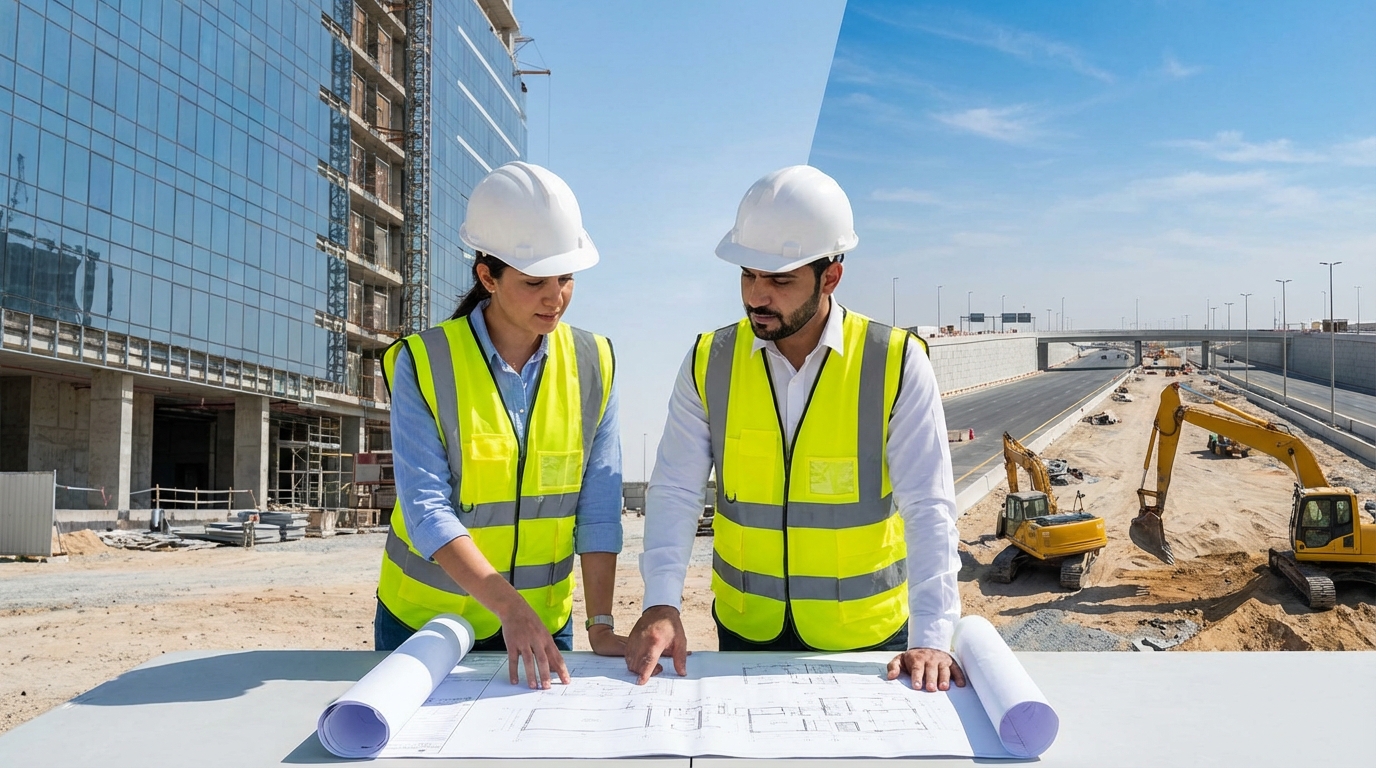
The liability component distinguishes CAR insurance as the preferred choice for complex UAE projects. Third-party liability coverage protects contractors against claims for bodily injury or property damage affecting neighboring properties, pedestrians, or existing structures—scenarios that occur frequently in high-density areas like Dubai Marina, Downtown Dubai, or Abu Dhabi’s central business districts. Additionally, CAR policies often incorporate professional indemnity elements and can be structured to cover multiple contractors, subcontractors, and the project owner under a single policy framework, simplifying insurance coordination on large-scale developments that characterize the UAE construction sector in 2026.
Key Differences That Impact UAE Construction Projects
The coverage scope represents the most significant distinction between these insurance types. Builders risk focuses exclusively on physical damage to the construction project itself, while contractor all risk encompasses the project, equipment, surrounding properties, and third-party liabilities. For UAE projects, this difference proves crucial when considering the regulatory environment—Dubai Municipality and Abu Dhabi’s Department of Municipalities and Transport increasingly require comprehensive liability coverage for permits and approvals, making CAR insurance not just preferable but often mandatory for commercial developments exceeding certain values or complexity thresholds.
Cost Considerations and Premium Structures
Premium costs reflect the coverage breadth, with builders risk policies typically ranging from 0.1% to 0.3% of project value in the UAE, while contractor all risk premiums generally span 0.2% to 0.5% or higher depending on project complexity, location, and contractor experience. The higher CAR premiums purchase substantially more protection, including third-party liability limits that can extend to AED 50 million or beyond for major projects. UAE insurers in 2026 increasingly offer customized premium structures that account for project-specific risk factors such as proximity to existing structures, construction methodology, contractor safety records, and whether the project involves high-risk elements like deep excavation or marine works common in Dubai’s coastal developments.
Choosing the Right Coverage for Your UAE Project
Project type, scale, and location should drive your insurance decision. Standalone residential villas, interior fit-outs, or renovation projects in controlled environments may function adequately with builders risk coverage, particularly when third-party exposure remains minimal. However, high-rise developments, infrastructure projects, mixed-use complexes, or any construction in densely populated UAE urban centers warrant contractor all risk insurance.
The UAE’s legal framework increasingly holds contractors and developers liable for damages extending beyond their immediate project boundaries, making the liability protection inherent in CAR policies essential risk management rather than optional enhancement.
Navigating UAE Insurance Requirements in 2026
Current UAE construction regulations mandate specific insurance minimums based on project classification and value. Free zone developments, mainland projects, and government contracts each carry distinct insurance requirements that influence the builders risk versus contractor all risk decision. Major developers like Emaar, Aldar, and government entities typically require contractor all risk policies with specific endorsements covering delay in start-up, advanced loss of profits, and extended maintenance periods.
Understanding these contractual requirements before project commencement prevents costly mid-project insurance restructuring and ensures compliance with both regulatory standards and contractual obligations that govern UAE construction activities throughout 2026.
Secure Your Future with a Quick Quote
Secure your insurance with CoverB